
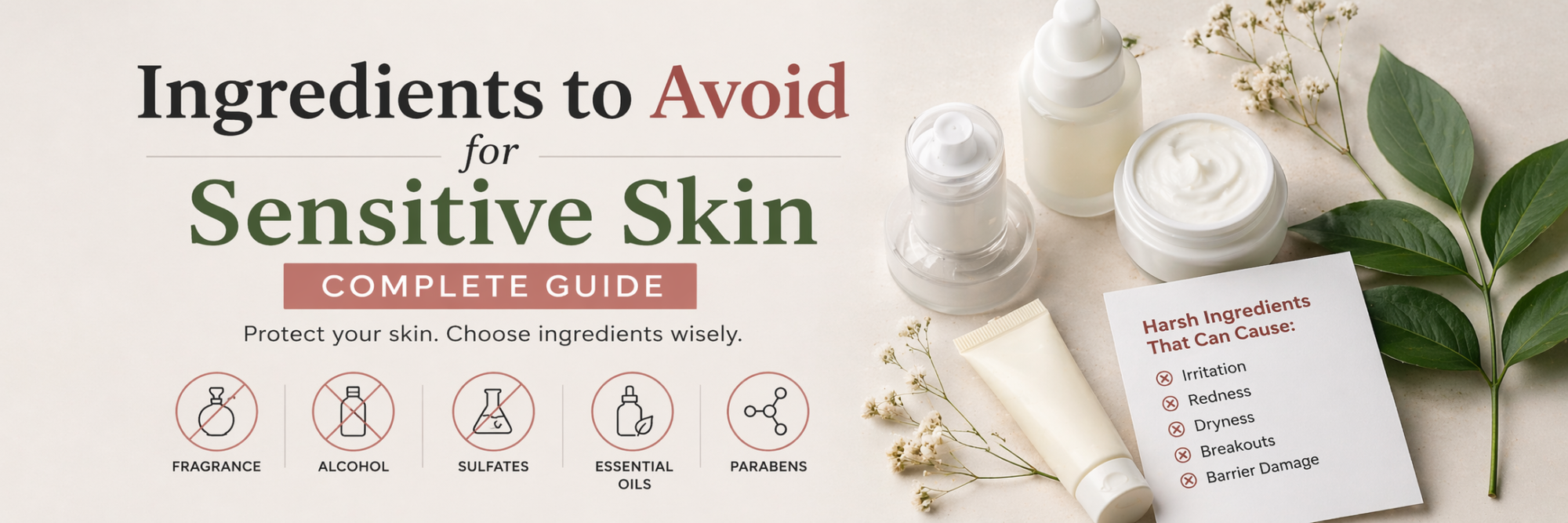
Sensitive skin requires extra care, especially when choosing the right products. Knowing the ingredients to avoid for sensitive skin can help prevent irritation, redness, and damage to your skin barrier. In this guide, we will explain the most important ingredients to avoid for sensitive skin and what to use instead.
In this complete guide, you will learn which ingredients are harmful for sensitive skin, why they cause problems, and what safer alternatives you should look for instead.
If you are just starting out, you should first understand a basic routine. You can read this guide on building a complete routine here: Simple Skincare Routine for Sensitive Skin in India
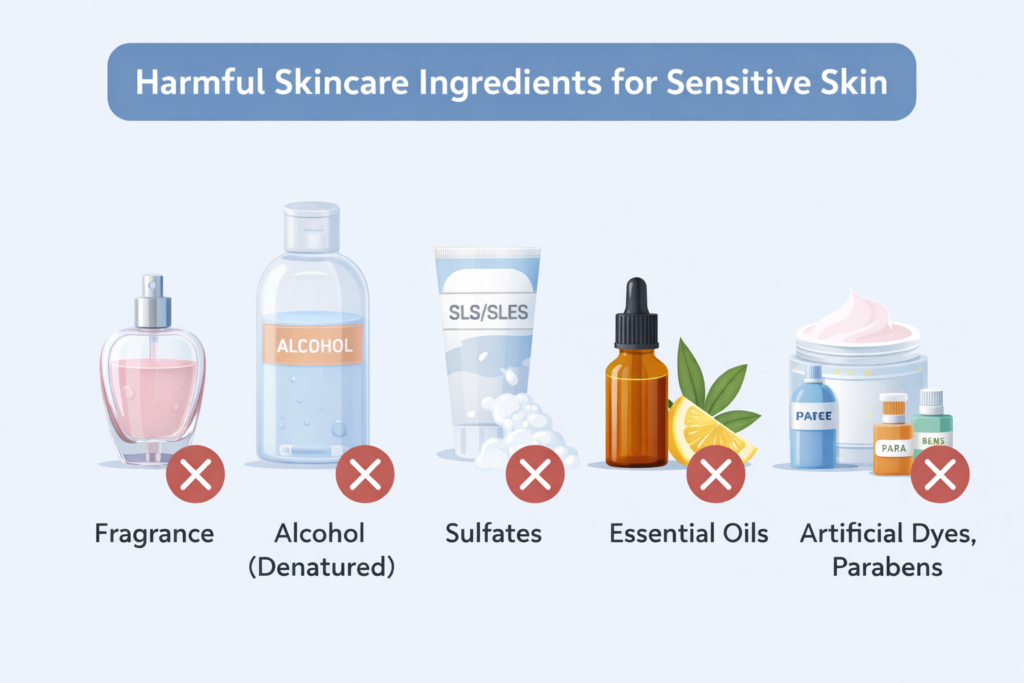
| Ingredient | Why It’s Harmful | Common Names on Labels | Safer Alternatives |
|---|---|---|---|
| Fragrance (Parfum) | Causes irritation, redness, and allergic reactions | Fragrance, Parfum, Perfume | Fragrance-free products |
| Alcohol (Denatured) | Dries skin and weakens the skin barrier | Alcohol Denat., Ethanol, Isopropyl Alcohol | Cetyl alcohol, Stearyl alcohol |
| Sulfates | Strips natural oils and causes dryness | SLS, SLES, Sodium Lauryl Sulfate | Sulfate-free cleansers |
| Essential Oils | Can trigger burning, irritation, and sensitivity | Tea Tree Oil, Lavender Oil, Citrus Oils | Products without essential oils |
| Artificial Dyes | No benefit to skin and may cause irritation | FD&C colors, CI numbers | Dye-free products |
| Parabens | May irritate some sensitive skin types | Methylparaben, Propylparaben | Paraben-free formulas |
| Strong Exfoliating Acids | Over-exfoliation, redness, and barrier damage | Glycolic Acid, Salicylic Acid (high %) | Mild exfoliants in low concentration |
What Is Sensitive Skin?
Sensitive skin is not a medical diagnosis, but a condition where your skin reacts easily to external factors. This can include skincare products, weather changes, pollution, or even stress.
Sensitive skin can react to various triggers, as explained by medical sources like Mayo Clinic.
Common signs of sensitive skin include:
- Redness
- Burning or stinging sensation
- Dryness or flaking
- Itching
- Breakouts after using new products
If you experience any of these regularly, your skin barrier may be compromised, making ingredient selection even more important.
Why You Must Avoid Certain Ingredients for Sensitive Skin
Many skincare ingredients are designed to cleanse, exfoliate, or preserve products. However, for sensitive skin, these ingredients can be too harsh.
They may:
- Strip natural oils from the skin
- Disrupt the skin barrier
- Trigger inflammation
- Cause allergic reactions
This is why choosing gentle products—especially sunscreen—is important. If you are unsure which sunscreen to pick, check this guide: Best Sunscreens for Sensitive Skin in India
Top Ingredients to Avoid for Sensitive Skin
1. Fragrance (Parfum)
Fragrance is one of the most common causes of skin irritation.
It is often added to improve the smell of products but can contain dozens of hidden chemicals that trigger reactions.
Why to avoid:
- Causes redness and irritation
- Can lead to allergic reactions
- Not necessary for skin health
What to look for instead:
- “Fragrance-free” or “unscented” labels
2. Alcohol (Denatured Alcohol)
Not all alcohols are bad, but denatured alcohol (often listed as Alcohol Denat.) is harsh and drying.
Why to avoid:
- Dries out the skin
- Weakens the skin barrier
- Can increase sensitivity over time
Safe alternatives:
- Fatty alcohols like cetyl alcohol or stearyl alcohol (these are moisturizing and safe)
3. Sulfates (SLS and SLES)
Sodium Lauryl Sulfate (SLS) and Sodium Laureth Sulfate (SLES) are cleansing agents commonly found in face washes and shampoos.
Why to avoid:
- Strips natural oils
- Causes dryness and irritation
- Can worsen sensitive skin conditions
Better alternatives:
- Gentle cleansers labeled “sulfate-free”
Choosing a gentle cleanser is just as important as avoiding harsh ingredients. If you’re unsure which products to use, check this guide: Best Face Wash for Sensitive Skin in India
4. Essential Oils
Essential oils are often marketed as natural and beneficial, but they can be highly irritating for sensitive skin.
Examples include:
- Tea tree oil
- Lavender oil
- Citrus oils
Why to avoid:
- Can cause burning and redness
- High risk of allergic reactions
Safer choice:
- Products without essential oils or with very low concentrations
5. Parabens (Controversial but Worth Noting)
Parabens are preservatives used to extend shelf life. While they are considered safe in small amounts, many people with sensitive skin prefer to avoid them.
Why to be cautious:
- May cause irritation in some individuals
- Increasing preference for paraben-free products
Alternative:
- Products labeled “paraben-free”
6. Artificial Dyes and Colors
Artificial colors are added purely for visual appeal and provide no skincare benefits.
Why to avoid:
- Can trigger irritation and allergic reactions
- Unnecessary for skin health
Look for:
- Products with no added colorants
7. Harsh Exfoliating Acids (Overuse)
Ingredients like glycolic acid or salicylic acid can be beneficial, but in high concentrations or frequent use, they can damage sensitive skin.
Why to avoid:
- Causes over-exfoliation
- Leads to redness and peeling
- Weakens skin barrier
Better approach:
- Use mild exfoliants occasionally and in low concentrations
You can also check ingredient safety ratings using trusted databases like the Environmental Working Group (EWG).
Safe Alternatives to Ingredients to Avoid for Sensitive Skin
| Ingredients to Avoid | Safe Alternatives |
|---|---|
| Fragrance (Parfum) | Fragrance-free formulations |
| Alcohol Denat., Ethanol | Cetyl alcohol, Stearyl alcohol |
| SLS, SLES (Sulfates) | Sulfate-free gentle cleansers |
| Essential Oils (Lavender, Citrus) | Minimal or no essential oils |
| Artificial Dyes (FD&C colors) | Dye-free products |
| High % Glycolic/Salicylic Acid | Low concentration exfoliants |
Instead of focusing only on what to avoid, it is equally important to know what to include.
Look for these gentle, skin-friendly ingredients:
- Ceramides: Help repair the skin barrier
- Niacinamide: Reduces inflammation and strengthens skin
- Panthenol: Soothes and hydrates
- Hyaluronic Acid: Provides deep hydration
- Centella Asiatica: Calms irritated skin
Hydration plays a key role in repairing sensitive skin. Using the right moisturizer can strengthen your skin barrier and reduce irritation. You can explore suitable options here:
Best Moisturizers for Oily Sensitive Skin in India and Best Moisturizers for Dry Sensitive Skin in India
How to Read Skincare Labels
Understanding ingredient labels can help you avoid irritation.
Tips:
- Ingredients are listed in descending order of concentration
- Avoid products with harsh ingredients in the top 5
- Look for “fragrance-free” and “hypoallergenic” labels
- Keep ingredient lists simple and minimal
Tips for Choosing Products for Sensitive Skin
- Always do a patch test before using a new product
- Introduce one product at a time
- Avoid over-layering multiple active ingredients
- Stick to a simple routine
Conclusion
Choosing the right skincare ingredients is crucial for managing sensitive skin. Avoiding harsh ingredients like fragrance, denatured alcohol, sulfates, and essential oils can significantly reduce irritation and improve your skin health.
Focus on gentle, hydrating, and barrier-repairing ingredients to build a routine that works for your skin. A simple and consistent approach is often the best solution for sensitive skin.
Frequently Asked Questions (FAQs)
What ingredients should be avoided for sensitive skin?
The most important ingredients to avoid for sensitive skin include fragrance (parfum), denatured alcohol, sulfates (SLS/SLES), essential oils, artificial dyes, and strong exfoliating acids. These ingredients can irritate the skin and weaken the skin barrier.
Why is fragrance bad for sensitive skin?
Fragrance is one of the most common causes of irritation. It can lead to redness, itching, and allergic reactions. Choosing fragrance-free products is a safer option for sensitive skin.
Are sulfates harmful for sensitive skin?
Yes, sulfates like SLS and SLES can strip natural oils from the skin, causing dryness and irritation. It is better to use gentle, sulfate-free cleansers.
Can alcohol damage sensitive skin?
Denatured alcohol can dry out the skin and damage the skin barrier, making it more sensitive and prone to irritation.
Are natural ingredients always safe for sensitive skin?
No, not all natural ingredients are safe. Essential oils like tea tree, lavender, and citrus oils can still cause irritation and allergic reactions.
How do I choose products for sensitive skin?
Look for products labeled fragrance-free and suitable for sensitive skin. Choose simple formulas with calming ingredients like ceramides, niacinamide, and panthenol.
How can I test if a product is safe for my skin?
You should always do a patch test before using a new product. Apply a small amount on your inner arm or behind your ear and wait 24 hours to check for any reaction.