
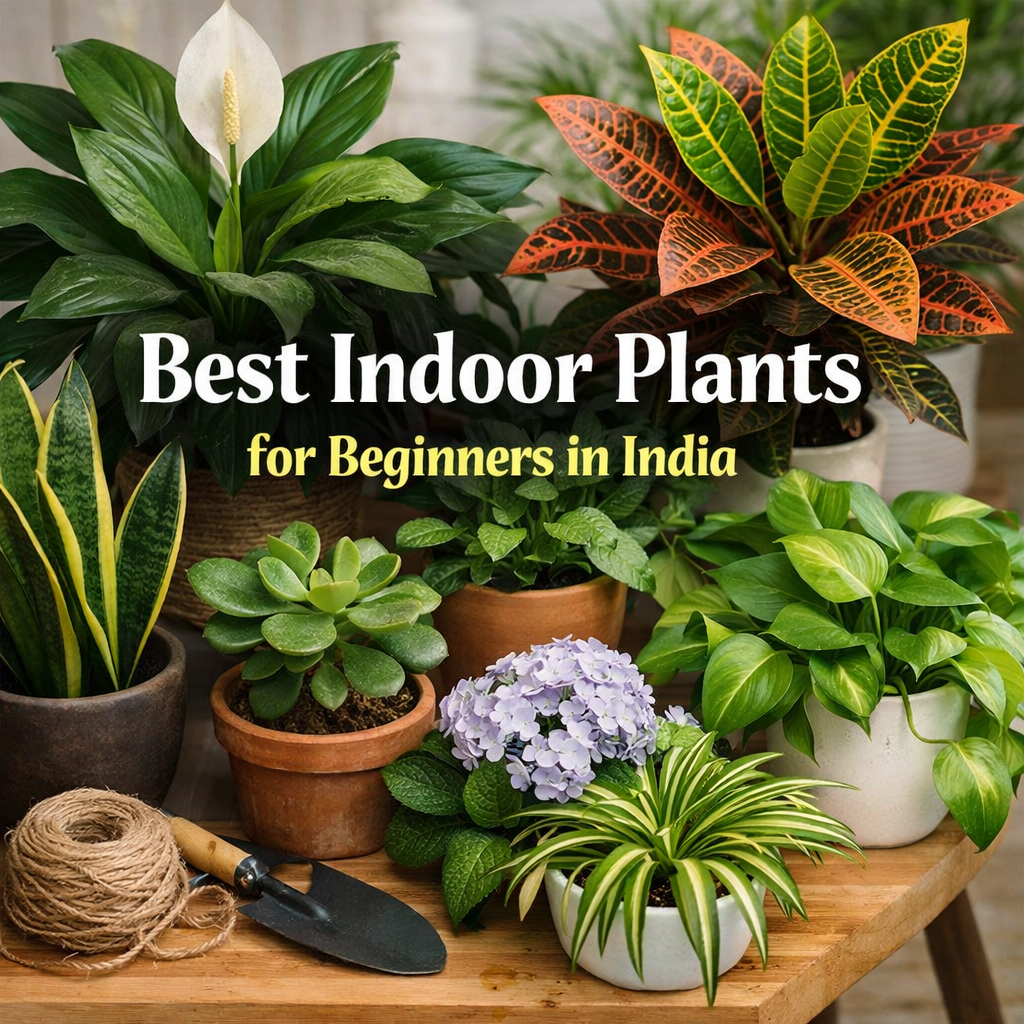
Best indoor plants for beginners in India are not just about decoration—they become a part of our daily life. Being surrounded by plants creates a peaceful environment that quietly motivates me every day. The greenery around me brings calmness, positivity, and a sense of connection with nature. The first thing I do in the morning is to say “Good Morning” and the last thing of the day is “Goodnight” to my plants and dogs and check if they are all fine and happy. Watching new leaves grow, noticing small changes, and simply spending a few moments with them makes the day feel more meaningful and refreshing.
I love this life and forget everything seeing them happy.
Which plant should you start with?
| Plant Name | Light Requirement | Watering Frequency | Difficulty Level | Special Note |
|---|---|---|---|---|
| Peace Lily | Indirect light | Regular (not too wet) | Easy | Doesn’t like direct sunlight |
| Jade Plant | Full sun / partial | Low (when soil dry) | Easy | Stores water in leaves |
| Snake Plant | Low to bright light | Once in 2–3 weeks | Very Easy | Survives in almost any condition |
| Money Plant | Partial shade | When soil dries | Very Easy | Grows fast from cuttings |
| Spider Plant | Indirect light | Moderate | Easy | Produces baby plants |
| Areca Palm | Indirect light | Regular | Easy | Needs space to grow |
| Croton | Bright light | Regular | Medium | Needs good light for colors |
| Hydrangea | Shade / soft sunlight | Regular (moist soil) | Difficult | Sensitive to heat and direct sunlight |
Jade Plant
The jade plant is one of the most decorative plants I have. I enjoy shaping and arranging it in different ways, which makes it even more special. Here, two jade plants are around my Buddha idol in our balcony. It adds a very peaceful and aesthetic look.
They grow well in both full sun and partial sunlight. I water them only when the soil feels dry because they store water in their leaves. Keeping watering minimal helps them stay healthy.
Croton Plant
Croton is one of the most colorful plants in our balcony. It adds a beautiful mix of colors and makes the space feel lively. I grow three different types of croton plants, and each one has unique patterns and shades.
It needs good light to maintain its colors, so I keep it where it gets enough brightness without harsh sunlight. Regular watering is important, but the soil should drain well.
Hydrangea
Hydrangea is often considered an outdoor plant, but for me, it behaves more like a shaded or indoor plant. It is a bit challenging to grow compared to others.
It does not survive in hot, direct sunlight. When it gets direct sunlight for a few hours, it goes to stressed. I had kept it in a sunny balcony earlier, but then I moved it under a palm tree where the sunlight is filtered. Since then, it has been much happier and has started blooming beautifully.
I water it daily in hot summer and make sure the soil stays slightly moist, especially during April, May and June until rainy season starts.
Peace Lily
Peace lily is one of those plants that instantly brings calmness to the space. I grow around six peace lily plants, and watching their big white flower heads slowly develop is something I genuinely look forward to every morning. Even when they are not fully bloomed, they still look beautiful.
It doesn’t like direct sunlight and stays happiest in a shaded indoor area with soft light. I water it regularly but make sure the soil is not too wet, as overwatering can harm the plant. Keeping it in indirect light helps it stay healthy and eventually bloom.
Snake Plant
The snake plant is honestly one of the easiest plants I have ever grown. I water it only once a month, and it still thrives without any issues. It grows well in almost any condition—indoors or outdoors—which makes it perfect for beginners.
I love placing it in the corner of my hall or room because it adds a clean and elegant look to the space. Even with very little care, it stays strong and healthy.
Money Plant
Money plant is one of the fastest-growing and most flexible plants I grow. It grows easily from cuttings or roots and spreads quickly, especially in partial shade.
I use it in different ways—sometimes hanging it on walls or doors, and sometimes guiding it with clips for decoration. Three different types of money plants are growing in our balcony, and each one adds its own charm. I water it when the soil starts to dry, and it continues to grow beautifully.
Spider Plant
Spider plant is a very rewarding plant to grow. What I love most is how it produces baby plants through its branches. These baby plants can be replanted easily, allowing me to grow more plants from one.
It looks especially beautiful in hanging pots, where the baby branches fall naturally. I water it moderately and keep it in indirect light, and it continues to grow without much effort.
Areca Palm
Areca palm is one of the most peaceful plants I have. Sitting near it with a cup of tea feels like being close to nature. Its size is perfect—not too big and not too small—and it creates a calm green environment.
I keep it in a space where it has enough room to grow, ideally around 3×3 feet if planted in a big pot. It grows well in indirect sunlight and needs regular watering, but I avoid overwatering. Its presence alone makes the space feel more relaxed and refreshing.
How I Take Care of My Indoor Plants
Taking care of plants has become a simple and peaceful part of my daily routine. Over time, I’ve learned that small, consistent care makes a big difference. Here’s how I care for my plants:
- Daily Check (Early Evening)
Every evening, I take a few minutes to observe my plants closely. If I notice pests or fungal issues, I spray neem oil as a natural solution. I mix 1 teaspoon neem oil in 1 litre of water and spray it gently on the leaves. I personally prefer using pure cold-pressed organic neem oil (with bottle by Agrigenic) or Ugaoo Neem Oil, as they work effectively without harming the plant.
- Monthly Epsom Salt Boost:
On the 1st of every month, I give my plants a gentle nutrient boost using an Epsom salt spray. It helps keep the leaves green and healthy. I use 1 teaspoon Epsom salt in 1 litre of water, and I’ve found My Armor Epsom Salt to be very reliable.
- Natural Fertilizer (Vermicompost):
I fertilise my plants once a month using homemade kitchen waste vermicompost. It’s a natural and effective way to nourish plants, although it takes time—usually around 4–5 months to prepare. If making it at home feels time-consuming, good quality options like Trust Basket Vermicompost or Ugaoo Vermicompost are great alternatives.
- Handling Dry Leaves or Root Issues:
If I notice leaves drying or the plant looking weak, it could be due to root rot. In such cases, I carefully trim the dead leaves or damaged branches. Then I gently wash the roots and dip them in a solution of 1 teaspoon hydrogen peroxide mixed in 1 litre of water for about 20 minutes. After that, I replant it in fresh soil. With a little care, the plant usually starts growing new buds again within a few days.
Take care of the trees, they will take care of you.
“Nature is all about give and take, and we reap what we sow.”
These small green companions teach us patience, care, and consistency without saying a word. We begin to notice the little things—a new leaf, a fresh bloom, or even how a plant responds when we change its place. Spending a few minutes with them every day brings a sense of peace that is hard to explain but easy to feel.
We can start with simple plants and slowly build a green space. We can try growing all these plants easily, especially beginner-friendly ones like snake plant, money plant, spider plant, peace lily, jade plant, and areca palm. Only plants like hydrangea and croton need a little extra care, but even they become rewarding as we learn more.
As we grow these plants, we also feel a gentle responsibility to grow more, to add more greenery around us, and to create a healthier environment for ourselves and those around us. Even one plant can change the mood of a space, and slowly, it inspires us to build a greener, calmer, and more meaningful living space.
Read more about Plants.